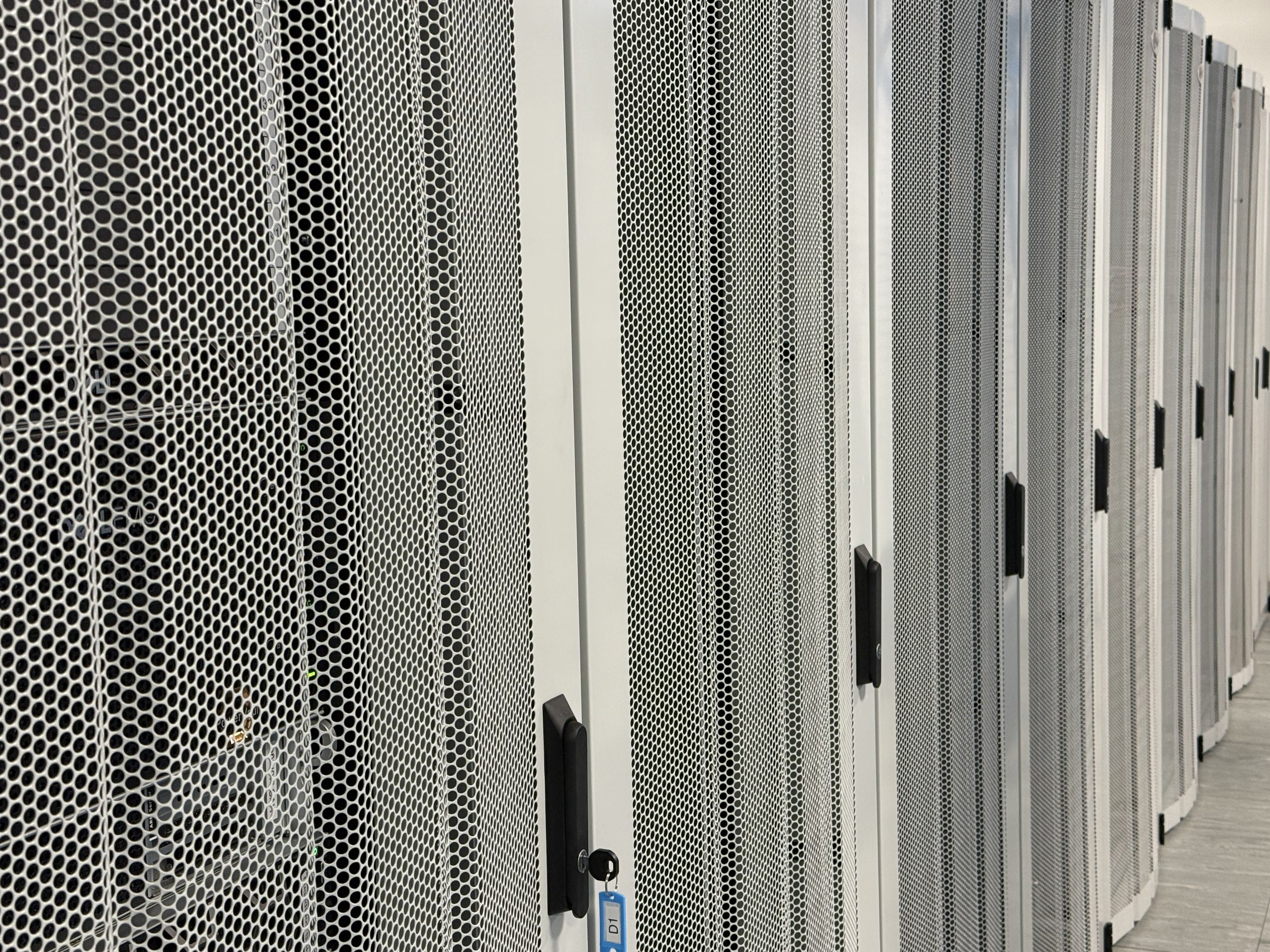

Latency to UK end users is decided largely by decisions made long before a packet leaves your server — specifically, by which networks your hosting provider peers with, and where. Two facilities can advertise identical bandwidth figures and deliver noticeably different real-world performance to UK visitors, because one has direct routes into London’s internet exchanges and the other is routing everything through two or three additional transit hops. This is the part of “network quality” that doesn’t show up on a spec sheet.
BGP in plain terms
Border Gateway Protocol (BGP) is the routing protocol that decides how traffic finds its way between the thousands of independent networks that make up the internet. Every network operator (an ISP, a hosting provider, a large enterprise) that wants control over its own routing runs BGP and holds an Autonomous System Number (ASN) — effectively a unique ID for their network’s block of the internet. When two networks “peer,” they exchange BGP routes directly, agreeing to carry each other’s traffic without paying a third-party transit provider to do it for them.
Peering matters because every additional network hop between your server and a visitor adds latency, and every dependency on a third-party transit provider adds a point where congestion, cost, or an outage on their network becomes your problem too.
LINX and LONAP: the UK’s peering fabric
LINX (the London Internet Exchange) is one of the largest internet exchange points in the world by peak traffic, connecting several hundred networks — ISPs, content delivery networks, hosting providers, cloud platforms and enterprises — directly to one another in London. LONAP (the London Access Point) is a smaller, mutually-owned exchange that plays a similar role, popular with regional ISPs and networks that want a second, independent point of interconnection distinct from LINX.
A hosting provider with a direct peering presence at LINX and/or LONAP can exchange traffic with the networks of most major UK ISPs — BT, Sky, Virgin Media, TalkTalk and others — without that traffic ever leaving London or transiting a third-party carrier. For a UK-hosted website or application, that’s the difference between a handful of network hops to a UK visitor’s ISP and a longer path that might route via international transit even for domestic traffic.
What this actually does to latency
The physics is straightforward: fewer hops and shorter physical paths mean lower round-trip time. For UK-to-UK traffic, well-peered networks routinely deliver single-digit-millisecond latency between London exchange points and regional termination. A provider relying purely on upstream transit providers for the same traffic can add tens of milliseconds through unnecessary routing detours — sometimes literally routing UK-to-UK traffic via an international hub and back, which is exactly the kind of inefficiency direct peering eliminates.
For latency-sensitive applications — real-time bidding, financial trading systems, VoIP, gaming backends, live video — this difference is not academic. It’s the gap between an application that feels instant to UK users and one that feels perceptibly sluggish, using identical server hardware.
Redundancy: why more than one exchange matters
Peering at a single exchange, however large, is still a single point of dependency. A resilient network design peers at multiple UK exchanges (LINX and LONAP being the two most significant) and maintains diverse upstream transit relationships from more than one Tier 1 carrier, so that a problem at any single exchange or with any single transit provider degrades — rather than breaks — connectivity. BGP’s real strength here is automatic: if a peering session or a transit link fails, BGP withdraws those routes and traffic reconverges via the remaining paths, typically within seconds, without any manual intervention.
Questions worth asking about a provider’s network
- Do you hold your own ASN and run BGP, or is all outbound routing controlled by an upstream provider?
- Are you a member of LINX, LONAP, or both, with direct peering sessions established (not just “connected to a network that peers there”)?
- How many diverse upstream transit providers do you carry, and are they genuinely independent at the physical layer, not just contractually separate?
- What’s the typical latency from your network to major UK ISPs?
Our network holds its own ASN with direct peering at UK exchanges and multiple diverse transit providers feeding into our Cambridgeshire data centre, which is what underpins the low-latency connectivity and IP transit we offer colocation and dedicated server customers. If network path and latency to UK users is a factor in your infrastructure decision, we’re happy to walk through our peering setup in detail.