
“UK data centre” gets treated as a single category in a lot of infrastructure decisions, when the location within the UK is itself a meaningful variable — not just for latency, but for cost, availability, power grid resilience and long-term scalability. London gets the reflexive first choice for a lot of buyers, largely on the assumption that it’s automatically the fastest option. That assumption deserves a closer look.
The latency argument for London is weaker than it used to be
London’s advantage has always been proximity to LINX and LONAP — the UK’s major internet exchanges (see our guide to BGP peering at LINX and LONAP) — and to the international submarine cable landing points that connect the UK to the rest of the world. But proximity to an exchange and proximity to the exchange building are not the same thing once you account for network path. A well-connected regional facility with direct peering or a dedicated low-latency link into London’s exchanges delivers latency to UK ISPs that’s very close to being physically inside London — often within a few milliseconds — because the bottleneck was never really “distance from London,” it was “quality of the network path back to London.”
For truly latency-sensitive use cases — high-frequency trading being the extreme end — physical proximity to specific exchanges still matters down to the microsecond. For the vast majority of business applications, web services and SaaS platforms, the difference between a well-connected regional facility and a London facility is not perceptible to end users.
Where regional facilities have a genuine structural advantage
- Power availability and cost. London’s grid capacity for large-scale data centre development is genuinely constrained — National Grid and Ofgem have both flagged connection capacity limits in and around London as a real bottleneck for new facility development. Regional locations, including the East of England, often have significantly more available grid capacity and more competitive power pricing, which matters both for a colocation provider’s ability to expand and for the power rates passed through to customers.
- Land and facility cost. Lower real estate and construction costs outside London translate into more sustainable long-term pricing for tenants, without the premium that comes from operating in one of the most expensive commercial property markets in the world.
- Physical risk diversification. A facility outside the M25 is, by definition, on a different part of the power grid and outside the flood, security and infrastructure-congestion risk profile that’s specific to central London — genuinely useful if your primary systems are already London-based and you want real geographic separation for disaster recovery purposes.
- Expansion headroom. Established London facilities are frequently at or near capacity. Regional facilities more often have room to grow with a customer’s needs over a multi-year contract, rather than forcing a migration when you need more racks.
Where London still wins
- Genuinely latency-critical applications where microseconds matter.
- Businesses that need frequent physical, same-day access to their own hardware and are based in London themselves.
- Direct cross-connects to a very specific set of financial or media industry counterparties that are only present in specific London facilities.
Our position: Cambridgeshire, with a real London network path
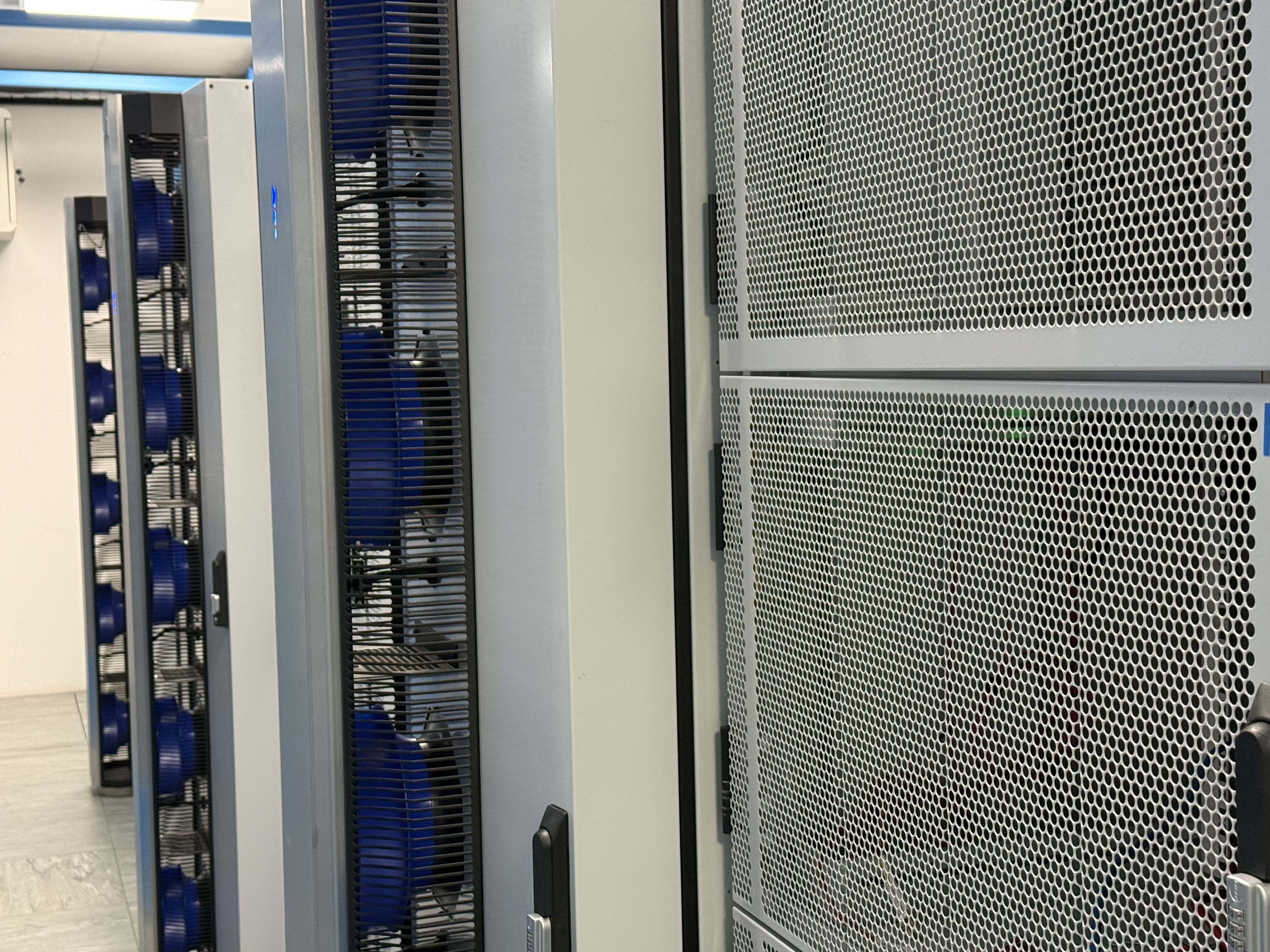
Our data centre is based in Cambridgeshire — close enough to London for excellent connectivity via direct peering into UK exchanges, while benefiting from the power availability, cost structure and physical risk diversification that a facility outside central London offers. For most UK businesses evaluating colocation, this combination — regional cost and resilience advantages with a network path that performs like a London-adjacent facility — is a genuinely stronger option than paying a London premium for a latency advantage that, in practice, most applications never actually need.
How to actually evaluate this for your own workload
- Test actual latency from a regional facility’s network to your real UK user base — don’t assume based on the map, ask for real numbers.
- Ask any provider (London or regional) about their power grid connection capacity and any constraints on future expansion.
- If DR or geographic separation from an existing London deployment is a factor, a regional facility is doing double duty — primary or secondary capacity, with genuine risk diversification built in.
- Compare all-in pricing (power, space, connectivity) over a realistic contract term, not just the headline rack rate.
If you want real, measured latency figures from our Cambridgeshire facility to your specific user base or existing infrastructure, ask us for a test rather than relying on a general assumption about location.